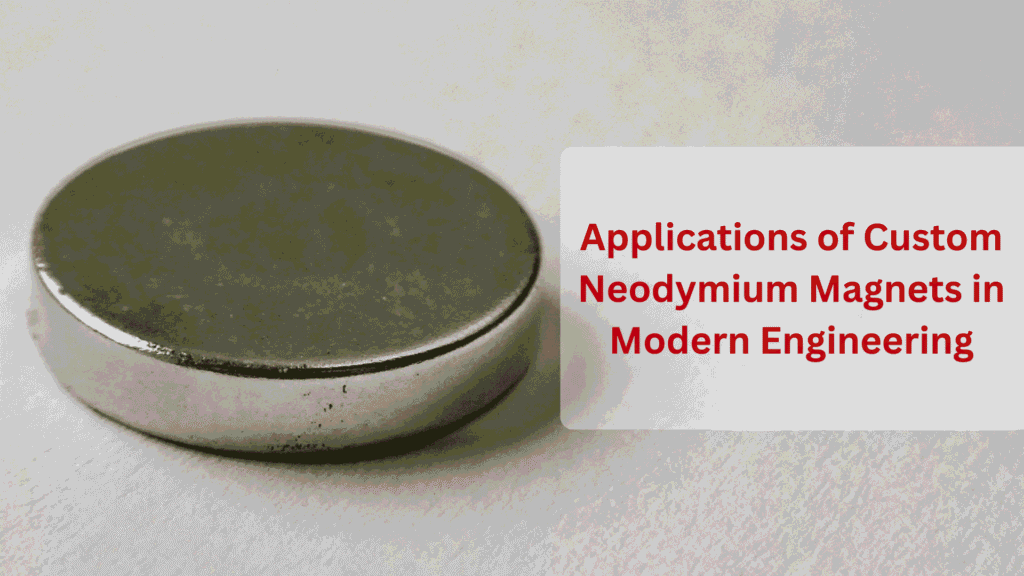
Neodymium bar magnets have the highest magnetic force of any commercially available permanent magnet, with a rectangular profile that easily mounts and holds. Rochester Magnet supplies these rare earth bar magnets to engineers, OEMs, industrial buyers, maintenance teams, and hobbyists who need reliable holding power in a compact footprint.
Whether you’re sourcing one high-strength bar magnet for a prototype or thousands for a production run, you can order standard stock or request a custom size built to your specification here at Rochester Magnet.
Get a free quote today.
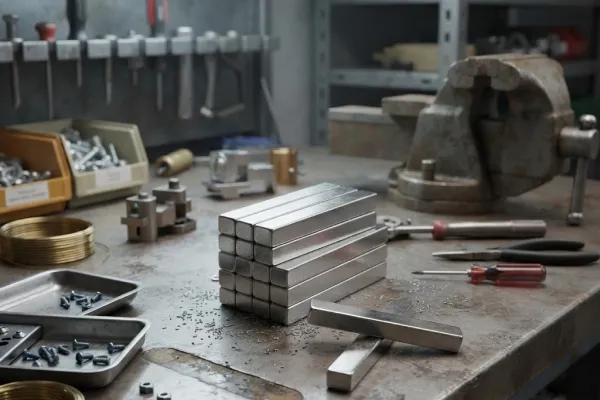
Neodymium bar magnets are permanent magnets made from an alloy of neodymium, iron, and boron (NdFeB). The rectangular bar shape positions the north and south poles at opposite ends or faces, which concentrates the magnetic field along a predictable axis.
That geometry makes bar magnets a strong choice for holding fixtures, position sensing, and any job where you want force aimed in a set direction rather than radiating evenly.
Because neodymium is the strongest rare earth material in commercial production, a small bar can produce a pull force that would take a far larger ceramic or alnico magnet to match. Engineers rely on this energy density when space and weight are limited.

Reach for neodymium bar magnets when the application calls for strong, focused holding power in a slim package. Common situations include:
If your project needs a cylindrical shape, our neodymium rod magnets may be a better fit. For flush mounting with a screw, look at our neodymium countersunk magnets.
Rare earth strength is overkill for some jobs, so it helps to know where neodymium stands compared to alternatives.
| Magnet type | Relative strength | Max operating temp | Typical cost | Best for |
|---|---|---|---|---|
| Ceramic (ferrite) | Low | Up to 400°C (750°F) | Low | Low-force, budget holding |
| Alnico | Moderate | Up to 540°C (1000°F) | Moderate | Very high-temperature sensing |
| Samarium cobalt (SmCo) | High | ~300 to 350°C | High | Heat and corrosive environments |
| Neodymium (NdFeB) | Highest | ~80°C standard, up to ~200°C with special grades | Moderate to high | Maximum force in a compact size |
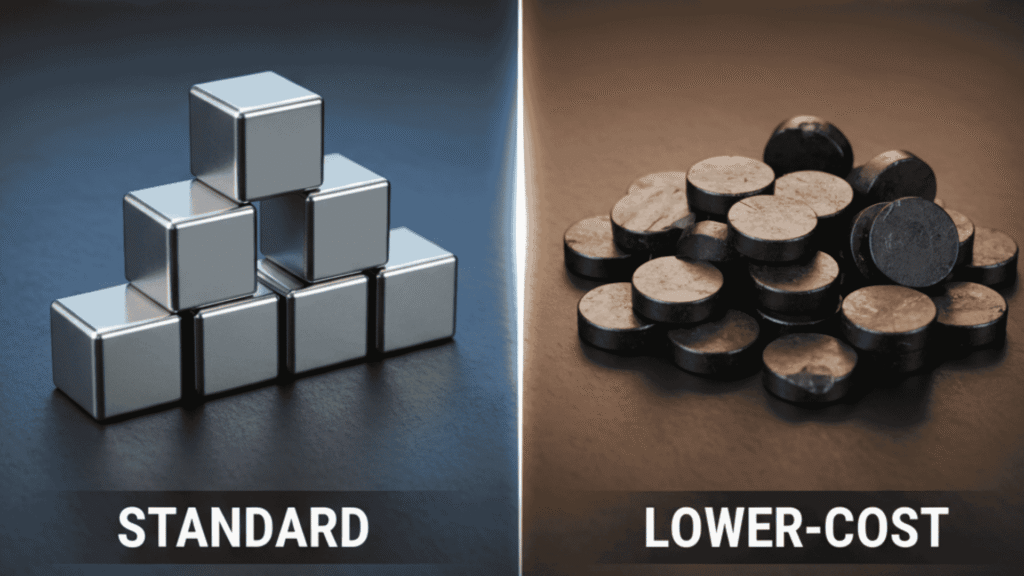
Neodymium magnets produce roughly five to seven times the magnetic strength of a comparable ceramic magnet, which is why they dominate demanding designs. Where heat or corrosion rules out neodymium, samarium-cobalt is the usual substitute. You can review both options on our rare earth magnets page.
Grade tells you how much magnetic energy a neodymium magnet stores, written as an “N” number that can range from N35 up to N52. A higher number means greater strength from the same size of magnet. N42 is a popular choice that balances strength with affordability, while N52 offers the maximum pull for space-constrained designs.
Standard neodymium magnet grades hold their full strength up to about 80°C (176°F). For hotter environments, grades carry a temperature suffix (M, H, SH, UH, or EH), each rated for a higher maximum operating temperature. Rochester Magnet stocks standard grades and sources high-temperature and high-grade material on request.
Bar magnets come in a wide range of sizes, from small precision bars a fraction of an inch long to large blocks used in industrial holding systems.
Popular stock sizes include:
Need a dimension not listed? We convert and produce custom neodymium bar magnets from your drawing, including special lengths, thicknesses, and tighter tolerances. Send us your specs, and our team will confirm feasibility and lead time.

Pull force is the maximum force a magnet can hold before it separates from a steel surface. It depends on the grade, the size and thickness of the bar, the air gap, and the type of steel it contacts.
A clean, flat contact on thick mild steel gives you the rated pull, while paint, rust, thin sheet metal, or an uneven surface will reduce it.
For holding applications, size the magnet with a safety margin above the load. If a bar needs to hold five pounds in practice, choosing a magnet rated well above that accounts for real-world surface conditions. Our team can help you match pull force to your load when you request a quote.
Neodymium corrodes if left bare, so every bar magnet ships with a protective coating. Triple-layer nickel-copper-nickel plating is the standard finish, providing a bright surface that withstands routine handling and moderate humidity.
For harsher conditions, coatings such as epoxy, zinc, and rubber add extra corrosion or impact resistance. If your bar magnets will live outdoors or in a washdown area, ask about a finish matched to the exposure.
Industrial bar magnets appear across manufacturing and product design wherever compact, strong holding is useful. Common uses include:
For a closer look at bar magnets in motors and other equipment, see our guide on choosing between neodymium arc and bar magnets.

Here are a few questions that can narrow the choice quickly:
Your answers indicate the grade, size, coating, and quantity. If you’re comparing specifications across suppliers, our team can review your requirements and recommend a magnetic bar that fits the job.
Procurement and engineering teams can send drawings or a parts list with a quote request, and we’ll respond with pricing and availability.
Rochester Magnet has supplied magnetic materials to customers in the US and overseas for more than 25 years. When you order strong bar magnets from us, you get:
Whether you buy a handful or a pallet, you can order online or request a quote for volume and custom orders.
Browse our complete stock of neodymium bar magnets today, or request a custom quote, and our team will help you match grade, size, and coating to your application.
For most general holding, N42 offers a good balance of strength, availability, and cost. Step up to N50 or N52 when you need maximum pull from the smallest possible bar. If the magnet will run hot, choose a temperature-rated grade (H, SH, UH, or EH) rather than a higher N number, since heat resistance and raw strength are separate specifications.
No. Sintered neodymium is hard and brittle, and cutting or drilling a finished magnet damages it and strips the coating. Order the finished dimensions you need instead, and we can produce custom sizes and shapes to your drawing.
You can purchase neodymium bar magnets directly from Rochester Magnet. We offer fast shipping and excellent customer service.
Yes, we do! Our bulk and wholesale neodymium bar magnets are ideal for businesses and large projects.
Bare neodymium corrodes, so our bar magnets come with a protective coating. Nickel-copper-nickel plating is standard, and epoxy, zinc, or rubber finishes are available for wet, outdoor, or chemically harsh environments.
Simply complete and submit the online form below and we’ll review your specs and contact you with any questions.