

A flexible magnetic sheet works by using a magnetized ferrite-rubber polymer composite that is attracted to ferromagnetic surfaces, such as steel or iron. Its flexible substrate lets it maintain that attraction while bending, curving, or wrapping around a surface, rather than lying flat like a rigid magnet.
This guide covers what flexible magnetic sheets are made of, current sizing and thickness options, how they compare to neodymium and samarium cobalt magnets, and where they perform best in real projects. Use it to compare flexible sheet against rigid magnet options before you commit to a material for your next project.
Manufacturers blend ferrite powder with rubber polymer resin, then shape that mix into sheets or strips using rollers or extrusion equipment. One side gets magnetized in alternating north-south stripes; the other side is typically laminated with vinyl so it can be printed on.
Because the material is soft enough to cut with scissors or a utility knife, roller presses can also die-cut it into custom shapes at speed. Once magnetized and laminated, the sheet is ready for offset, screen, or digital printing, the same finishing steps used for vehicle signs and POP graphics. Sheets used for vehicle signage should be stored flat and kept clean, since trapped grit can scratch a car’s paint over time.
Rochester Magnet’s flexible magnetic sheet stock comes in five thicknesses: 0.015″, 0.020″, 0.030″, 0.045″, 0.060″. Standard rolls run 24.38″ or 48″ wide by up to 50 ft. long, and every roll can be cut or die-cut to the length, width, or shape a project calls for.
There’s no fixed “4×8” sheet in our catalog. Instead, you set the finished size: order a full 50 ft. roll for high-volume runs, or have us cut individual pieces, including a 4 ft. by 8 ft. section, to spec.
Finish options include plain magnetic sheet, magnetic sheet with adhesive backing, and magnetic sheet with a printable laminate, plus six standard colors (red, yellow, green, blue, black, and white) for finished, ready-to-print pieces. Shop current stock online or request a custom cut.
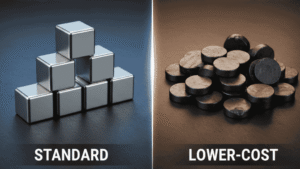
Flexible magnetic sheet and neodymium or samarium cobalt magnets solve different problems. Neodymium and samarium cobalt are rigid, rare-earth magnets built for maximum pull force in a small footprint, the kind of strength needed for motors, lifting, or precision assemblies.
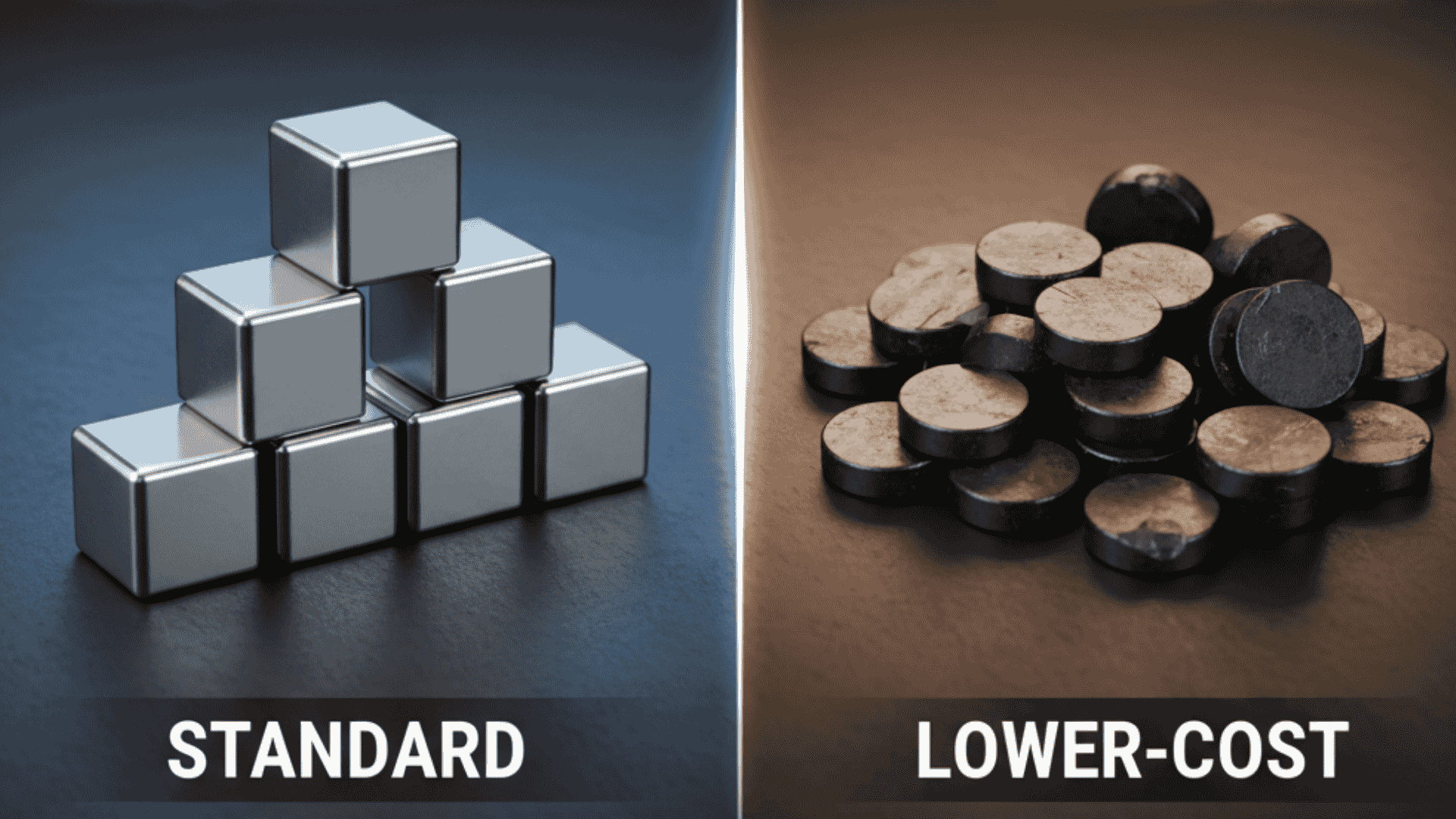
Flexible sheet trades that raw pull force for a lower cost per square foot and a shape that bends, wraps, and can be cut to size with scissors. For low- to medium-strength holding jobs, like signage, POP displays, or door seals, flexible sheet does the job at a fraction of the cost and lets you cut the exact shape you need on-site.
If a project needs to lift, hold under vibration, or run in high heat, neodymium, samarium cobalt, or a rigid ceramic/AlNiCo assembly is the better fit. If it needs to cover a surface, flex, or print, flexible magnetic sheet is the more practical and affordable choice.
The right call usually comes down to the job: match the magnet type to how much holding force the application actually needs before comparing prices.
Flexible magnetic sheet earns its place in a magnet lineup by trading raw pull force for flexibility, low cost, and a shape you can cut yourself. It covers vehicle signs, retail displays, control charts, and memo boards equally well, and Rochester Magnet stocks the thicknesses, widths, and finishes to match each job.
View current sizes and finishes on our flexible magnetic sheet page, or contact our team to request a quote for your specifications.


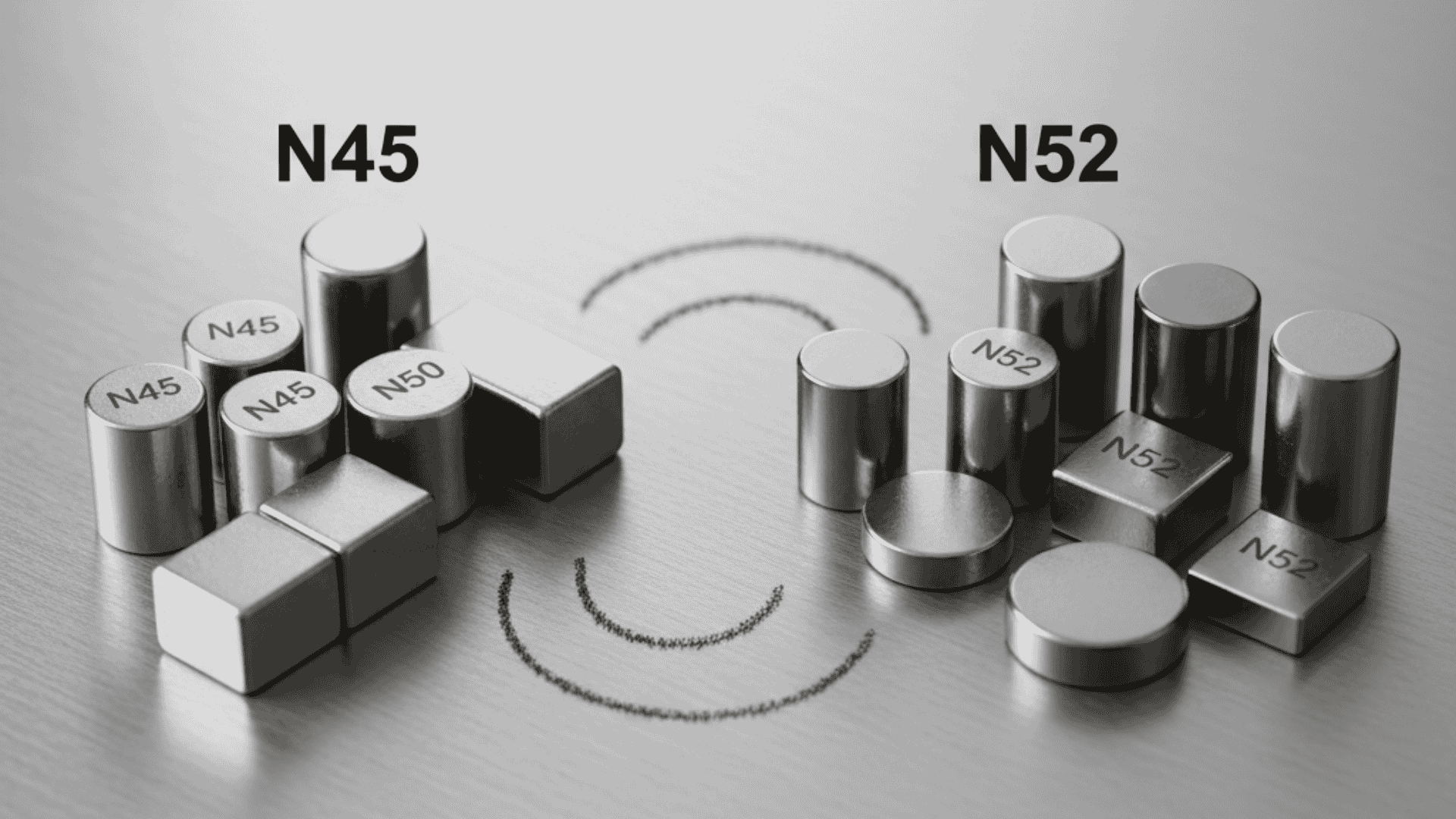
Selecting the right magnet grade is a critical decision for engineers, manufacturers, and product designers. Among the most commonly compared options are N45 and N52

Modern engineering is defined by efficiency, precision, and innovation. As industries push for compact designs, higher performance, and smarter systems, magnetic solutions have become essential
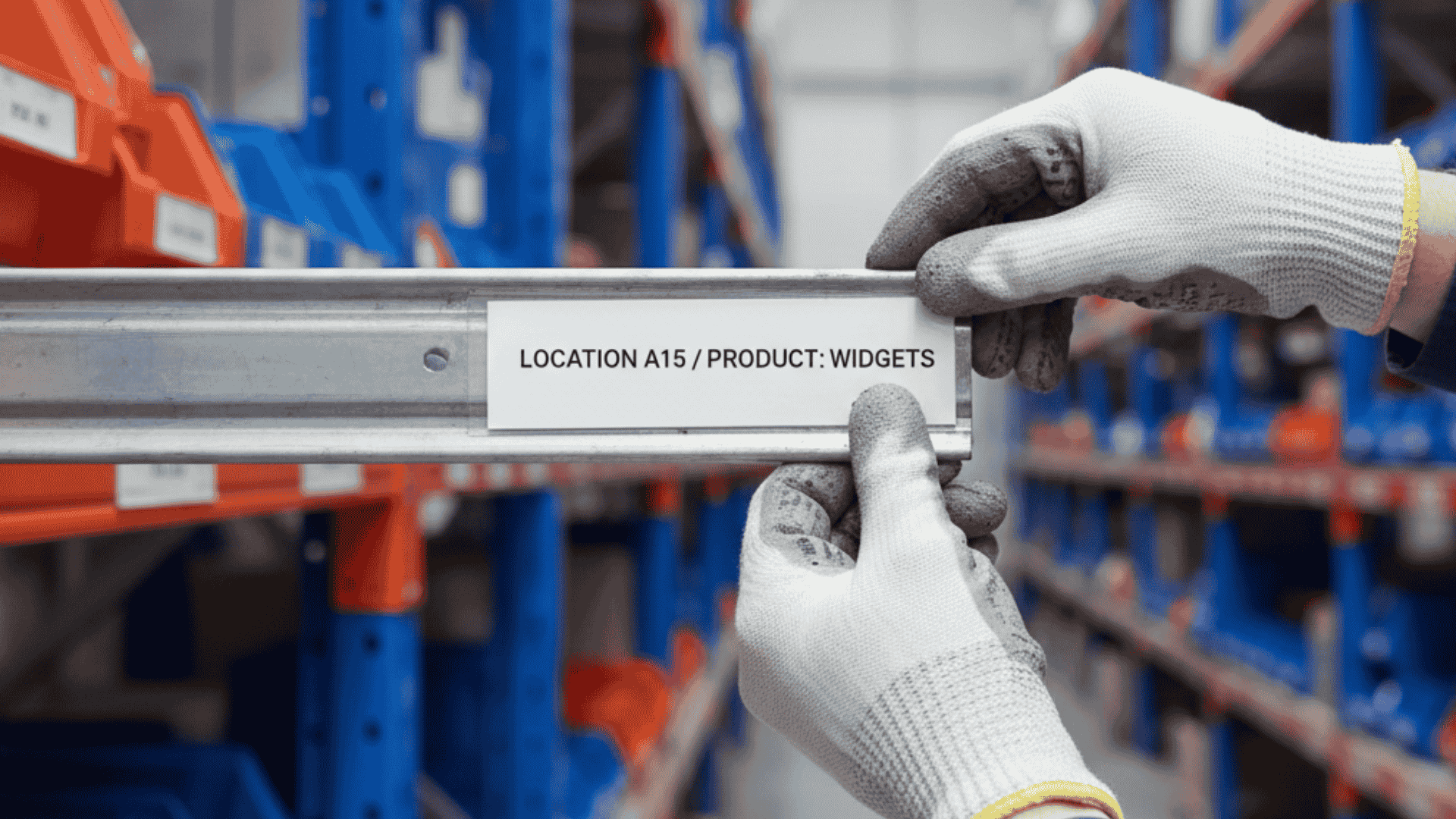
Neodymium magnets have become essential components across industries, from manufacturing and electronics to retail displays and warehouse systems. Known for their exceptional strength and versatility,